Backing Australian
Small Business
Backing Australian Small Business
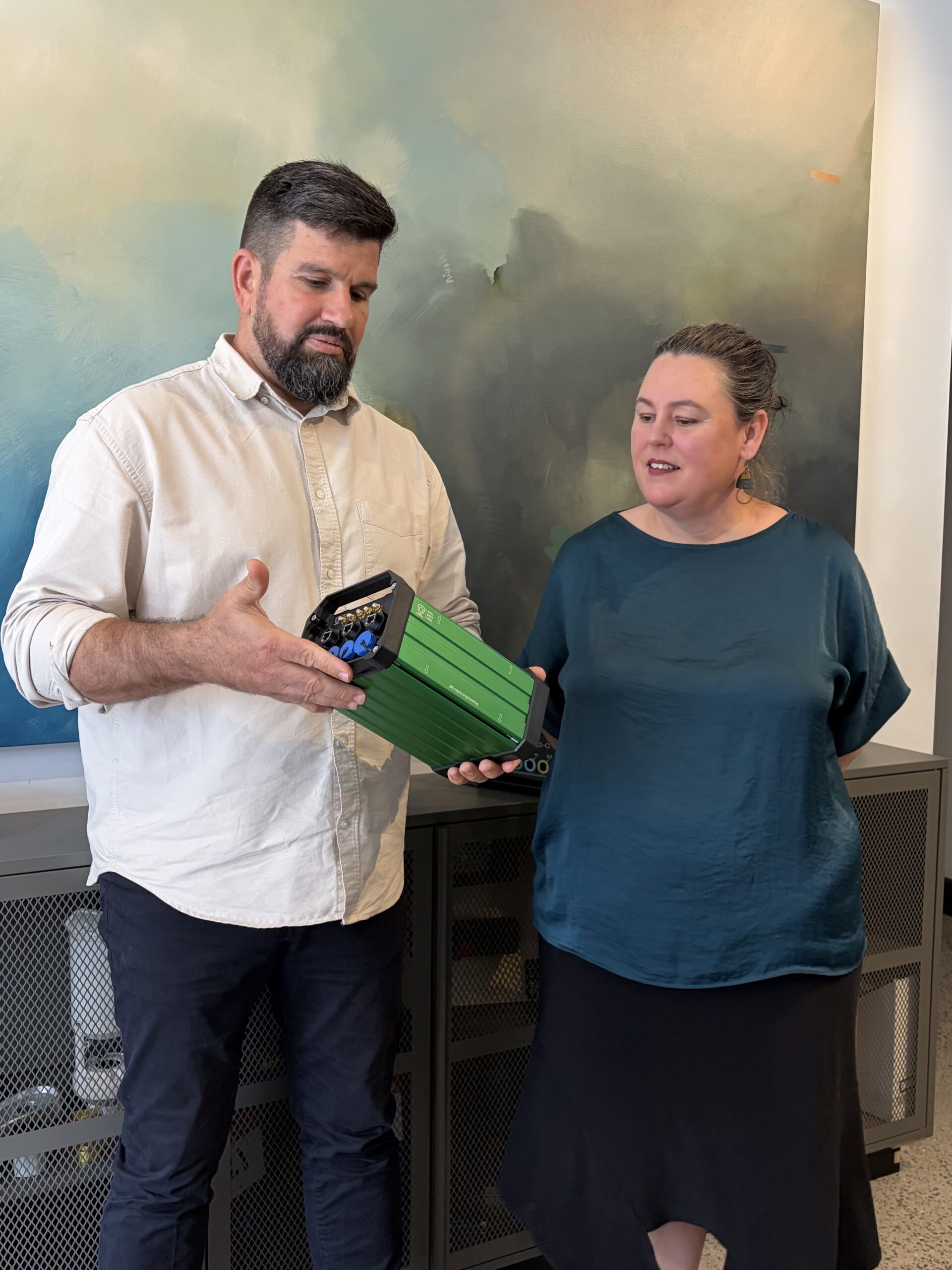
This week, we were proud to welcome NSW Small Business Commissioner Kalina Koloff to the Design Anthology workshop in Newcastle as part of NSW Small Business Month.
Kalina was in the Hunter on a regional tour, which included the Business Hunter Breakfast and a roundtable with local business, education and government stakeholders. It follows the release of the Commission’s new Insights Paper, NSW Small Business: A Story of Diversity and Dynamism. The paper shows how small business in NSW is changing, with more knowledge-based businesses, more use of digital tools and AI, and more regional businesses competing well beyond their postcode.
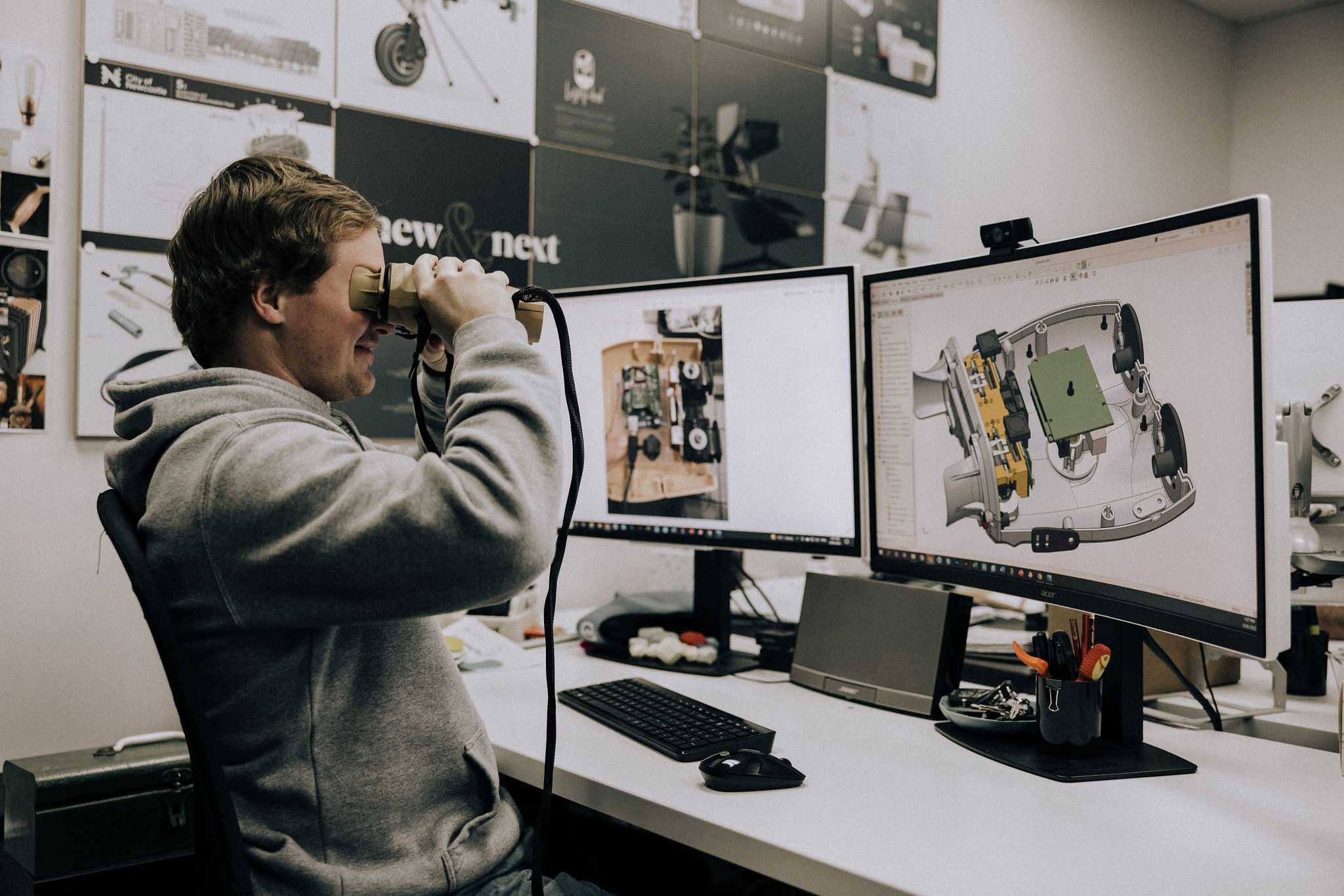
Design Anthology is a good example of that shift. We’re a Newcastle-based product development and manufacturing business, and for 20 years we’ve helped clients across Australia and overseas turn ideas into products that work, last and make money. We also picked up two 2026 Good Design Awards this year.
As problem solvers, we wanted to use the visit to talk about the bigger picture. Our founder and director, Josh Jeffress, shared his thoughts on what Australian industry could be doing better.
What’s working
There’s already a lot of good happening. Collaboration has led to some of our best opportunities, particularly with businesses that share our values, share equipment and knowledge and help each other grow, even when there’s some competition.
Josh also pointed to programs that are doing real work. AMGC is doing a fantastic job connecting manufacturers and opening doors. The Hunter Innovation Festival showcases the innovation already happening across the region. And MVP and Manufacturing Modernisation were two good funding models that supported practical product development, commercialisation and manufacturing capability.
A program worth rolling out further
One program Josh would love to see in more places is the Venture Mentoring Service (VMS). Based on a model developed at MIT, it’s already run by universities including RMIT, Sydney and Newcastle. At Newcastle, the Venture Mentor Service sits alongside the Integrated Innovation Network (I2N) Accelerator. It connects founders with a small team of experienced mentors, helping them test ideas, think critically, understand business and identify opportunities before committing time and money.
Josh’s view is that VMS should be promoted, funded and rolled out to more locations, both nationally and regionally. It should be there to help businesses scale, be resilient and open up pathways without years of heartache.
What’s getting in the way
Josh’s biggest concern is policy stacking. Individually, regulations often make sense, but the combined effect on a small business is the time, cost, pressure on employers and opportunities lost. Small businesses don’t have large teams to interpret and manage it all, and it’s not always clear what they’re required to do.
Funding is another challenge. Changes in government or program direction create uncertainty and delays, and businesses can’t plan their investments around funding that keeps stopping and starting. Josh also believes the R&D Tax Incentive needs to be protected and strengthened, especially the early experimental activities that make practical manufacturing R&D possible.
What we could do differently
Josh’s message was to start with the commercial opportunity. What could we develop, manufacture and sell, who’s buying it, and can we compete internationally? Technology like robotics, automation and AI are tools, and only matters when it’s solving the right problem.
He also suggested backing capable small businesses with investments of $75,000 to $150,000 for equipment, skilled people, development time or market access, with further funding released when agreed KPIs are met. Other ideas included longer-term, faster and independently administered funding that survives election cycles, making better use of networks like AMGC, I2N and VMS, and simplifying compliance by removing duplication and ambiguity while keeping the protections that matter.
What Australia could look like
If we get it right, Josh sees a more diversified economy, more small businesses growing into medium businesses, and more Australian products and services earning ongoing revenue overseas. He’d like to see profitable, resilient businesses with the strength to keep investing, and better workplaces and more skilled jobs for future generations. He believes there’s something to learn from Germany’s Mittelstand, where specialised businesses invest for the long term and compete internationally.
Problem solving in practice
This is the thinking we bring to our clients. Many come to us with a product that costs too much to make, doesn’t last, or no longer fits or performs like it used to. We challenge the brief, look for smarter designs and find the right suppliers.
Banlaw is a good example. Nearly 12 years ago, they asked us for a traditional exhibition stand. We found the bigger problem was the $9,000 to $12,000 it cost to transport, set up and pack down at every event. So we designed, engineered and built a container-based exhibition and training system. It paid for itself in under six months, has travelled to Indonesia and the United States, and is still going strong 11 years later. You can read the full story on our Banlaw project page.
Thank you to Kalina and her team for visiting, and to Katrina Brangwin and Kieran A Moore from Brangwin & Moore Consulting for helping bring it together.
If you’ve got a product that’s costing too much, wearing out too soon or just isn’t doing the job, book an Expert Hour with our team. You’ll get a focused session with our design, engineering and manufacturing experts, with no need to commit to a full project.